
Bacterial and Viral Hemorrhage in Grass Carp and Methods for Prevention and Treatment

Grass carp belong to the carp family (Cyprinidae), a species increasingly farmed in our country, particularly across northern provinces. However, as farming areas expand, disease outbreaks occur more frequently. Among these, hemorrhage is the most prevalent clinical sign observed in grass carp.
Infection Conditions
Hemorrhage in grass carp occurs year-round during cool weather with water temperatures between 25-32oC, most commonly in late spring to early summer (March–May) and late autumn (August–October). Furthermore, the disease often manifests during storms and tropical depressions when temperatures drop abruptly and the rearing environment has experienced prolonged contamination. Compounding this, poor aquaculture management weakens fish immunity, leaving them susceptible to opportunistic bacterial and viral pathogens.
Early Clinical Signs of the Disease
Due to suboptimal environmental conditions for fish growth, fish may initially be attacked by parasites before contracting hemorrhagic pathogens. These parasites cause the skin and fins to become reddened, which is most readily observed at the fin bases, or causes the caudal fins to become frayed and eroded.
Subsequently, the gills are affected. When infected with parasites, the operculum often remains open and swollen. At times, the gill filaments turn purplish-pink (due to oxygen deficiency), exude excessive mucus, and become frayed and eroded similar to the tail fin. In severe hemorrhagic cases, gills may rot, necrose, and display numerous white spots on the gill filaments and gill rakers.
Bacterial vs. Viral Hemorrhage in Grass Carp
Grass carp afflicted by either bacterial or viral infections exhibit severe hemorrhage followed by mortality. Consequently, farmers often mistake hemorrhage for a single disease caused by a single pathogen. However, a clear distinction must be made between the causative agents to administer appropriate interventions.
To differentiate the pathogens causing hemorrhage in grass carp, farmers must carefully monitor the stage of onset along with external and internal pathological lesions.
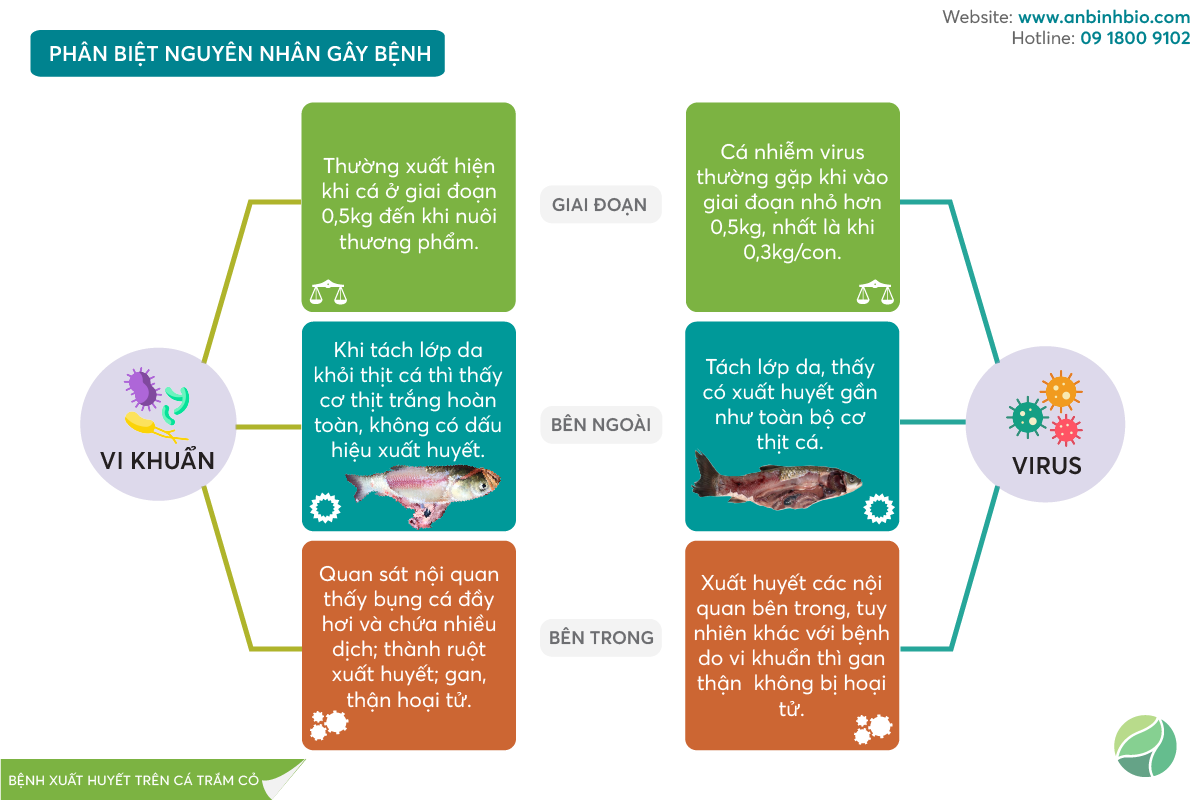
Comparison of hemorrhagic symptoms in grass carp caused by two distinct pathogens
Prevention and Treatment of Hemorrhagic Disease in Grass Carp
Adjusting the dietary regimen:
Supplement green vegetation preferred by the fish, such as kohlrabi, squash leaves, and cassava leaves, in combination with formulated commercial feeds.
Enhance natural immunity by incorporating fresh garlic into the daily feed ration. Fresh garlic also provides natural antibacterial properties.
Additionally, Vitamin C complex and Biobactil digestive enzymes are essential to boost immune resistance and reduce stress when the rearing environment becomes polluted.
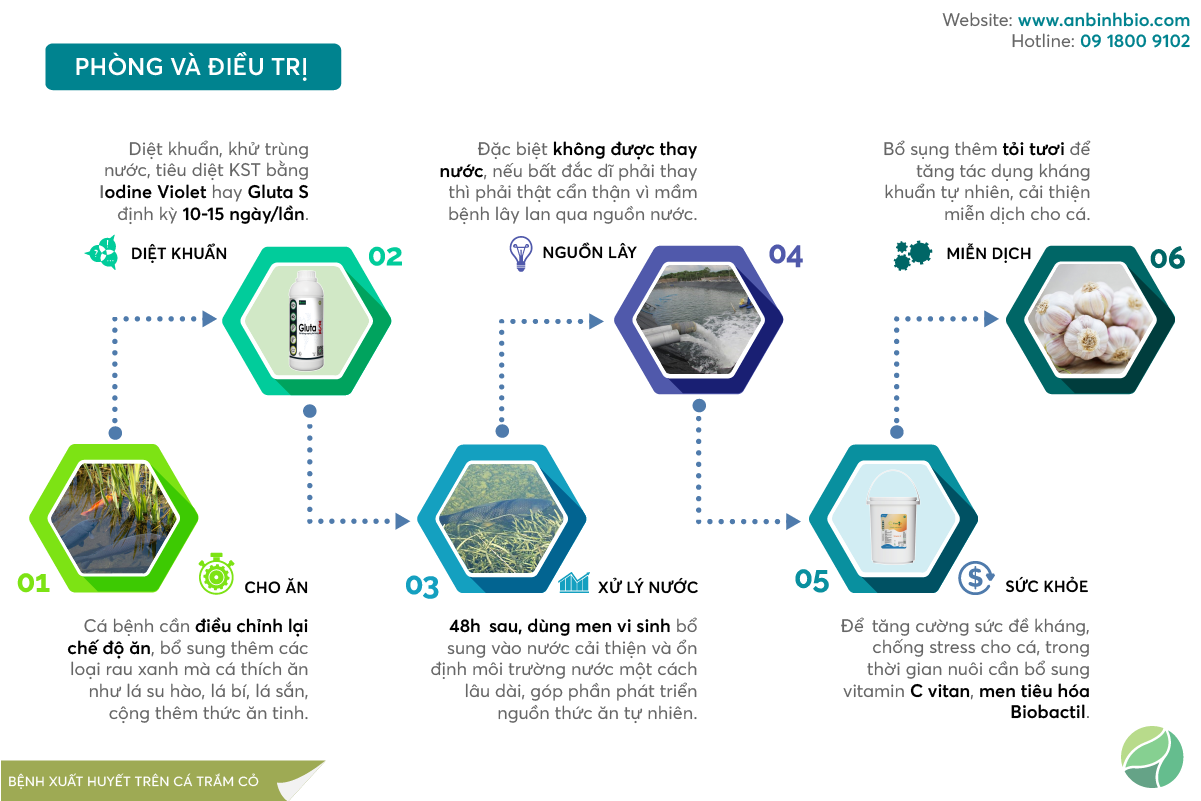
Hemorrhagic disease prevention and treatment protocol
Focusing on aquaculture water treatment:
Periodically disinfect and sanitize the culture pond every 10–15 days using Iodine Violet or Gluta S.
Critically, do not perform water exchanges; if an exchange is unavoidable, execute it with extreme care as pathogens can easily spread through water intake.
48 hours after disinfection, apply probiotics to stabilize and improve the aquatic environment over the long term, while concurrently promoting natural live food development in the grass carp pond.
Found this technical guide useful?
Share now to help fellow farmers prevent disease and manage ponds effectively.

